

- By Ruta27 Luxury
- September 23, 2026
- Tips
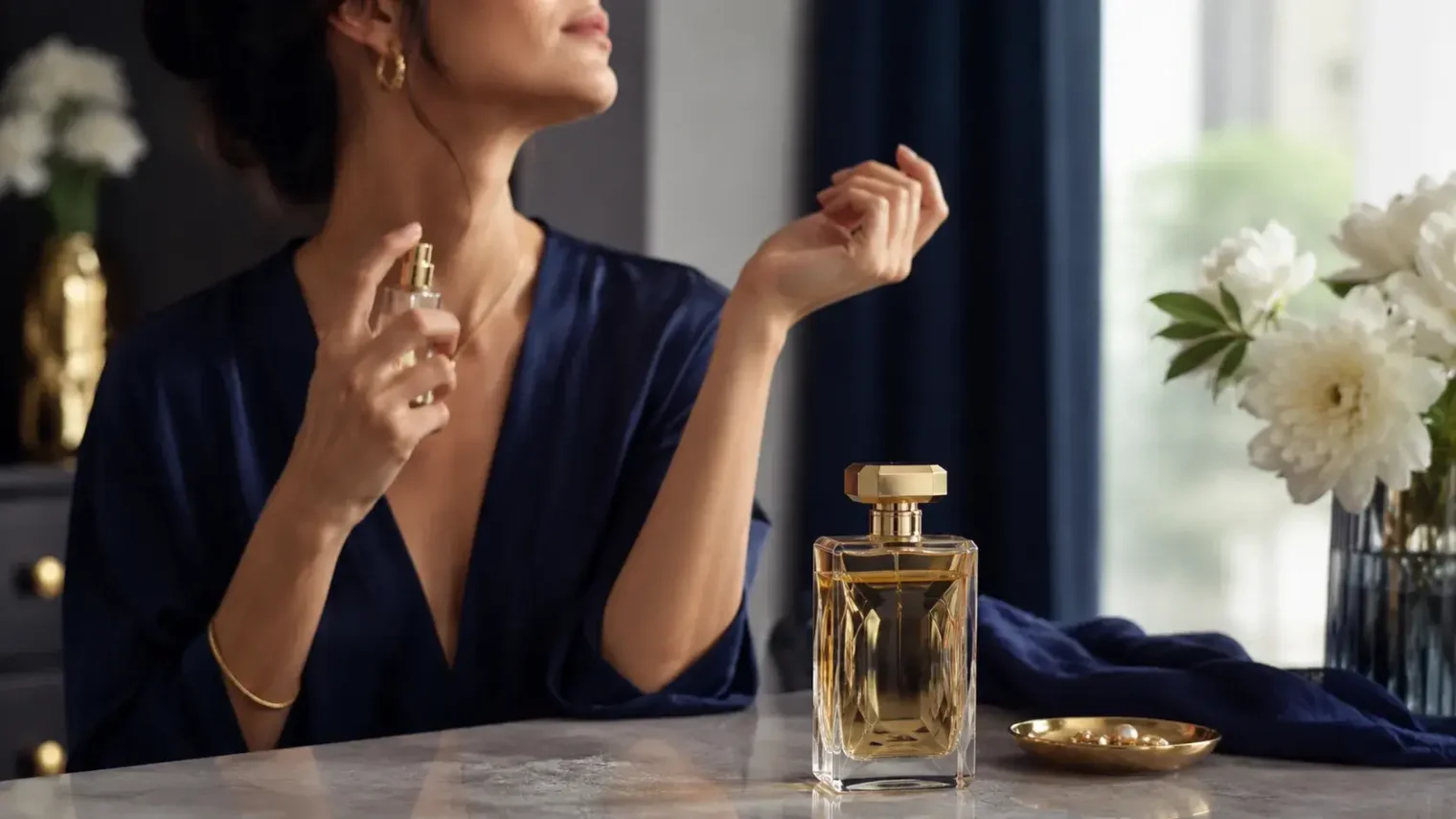
Using a fragrance involves much more than simply applying perfume before leaving home. A distinctive scent can become part of our identity, accompany us throughout the day, and leave a lasting impression. However, one of the most common questions among fragrance enthusiasts is how to make perfume last longer on the skin.
The longevity of a fragrance depends on many factors, including its concentration, the ingredients used, skin type, climate, and even the way it is applied.
Fortunately, there are several simple practices that can help significantly improve the performance of a perfume.
1. Apply Perfume to Moisturized Skin
Moisturized skin helps retain fragrance molecules more effectively.
When the skin is too dry, perfume may evaporate more quickly. For this reason, one of the best times to apply a fragrance is after bathing, when the skin is clean and slightly hydrated.
You may use an unscented moisturizer before applying perfume to prevent other scents from interfering with the fragrance.
This simple adjustment can significantly help improve the fragrance’s longevity on the skin.
2. Apply Perfume to Pulse Points
Pulse points are areas of the body where blood vessels are closer to the surface of the skin.
The natural warmth of these areas helps gradually release the different notes of a fragrance.
Some of the best places to apply perfume include:
- Wrists.
- Neck.
- Behind the ears.
- Inner elbows.
- Chest.
It is not necessary to apply perfume to all of these areas. A moderate application to strategic points generally produces better results than using an excessive amount.
3. Do Not Rub Your Wrists After Applying Perfume
This is probably one of the most common habits when applying fragrance.
After spraying perfume on the wrists, many people rub them together, believing that this will help distribute the scent more effectively.
In reality, it is preferable to allow the perfume to dry naturally.
Rubbing the skin may alter the way some of the more volatile fragrance notes develop after application.
Apply the fragrance and allow it to evolve naturally on the skin.
4. Apply Perfume After Bathing
The timing of application can also influence how long a fragrance lasts.
After bathing, the skin is usually clean, warm, and better hydrated, creating favorable conditions for applying perfume.
Wait a few minutes after drying off and apply the fragrance directly to the skin.
In addition to supporting longevity, applying perfume before getting dressed allows you to place it precisely on the desired pulse points.
5. Understand the Concentration of Your Fragrance
Not all perfumes contain the same concentration of aromatic compounds.
Some of the most common fragrance concentrations include:
Parfum: Typically offers a high concentration of aromatic compounds and generally provides greater longevity.
Eau de Parfum (EDP): Offers a balance between intensity and longevity, making it one of the most popular fragrance concentrations.
Eau de Toilette (EDT): Usually contains a lower concentration and provides a lighter fragrance experience.
Eau de Cologne (EDC): Generally offers a fresher and lighter profile, with a shorter duration.
This does not mean that all fragrances within the same category will perform in exactly the same way. The formula, ingredients, and individual characteristics of each perfume can also have a significant influence.
6. Consider Your Skin Type
The same fragrance may behave differently from one person to another.
Factors such as hydration, body temperature, and the natural characteristics of the skin can influence both the longevity and perception of a fragrance.
On drier skin, for example, some perfumes may fade more quickly.
If this applies to you, moisturizing the skin before applying perfume may become an important part of your fragrance routine.
It is also advisable to test a fragrance directly on your skin before determining how it truly performs on you.
7. Avoid Applying an Excessive Amount
Using more perfume does not necessarily result in proportionally greater longevity.
Excessive application may cause a fragrance to feel overly intense during the first few hours without significantly improving its performance later in the day.
The appropriate amount will depend on the concentration, atomizer, and natural intensity of each perfume.
More powerful fragrances may require only a few sprays, while lighter fragrances may allow for a different level of application.
The goal is to achieve the right balance between presence, comfort, and longevity.
8. Consider Applying Perfume to Clothing with Care
Some perfumes can remain on fabrics for an extended period.
However, this should be done with caution.
Certain formulas may leave marks on delicate fabrics or light-colored garments. If you wish to apply perfume to clothing, spray it from an appropriate distance and test it first on an inconspicuous area.
Applying perfume to clothing should not completely replace application on the skin, as a fragrance may develop differently on fabric.
9. Store Your Perfumes Properly
The way you store your perfumes also influences how well they preserve their original characteristics.
Heat, direct light, and constant temperature changes can affect a fragrance over time.
Perfumes should ideally be stored in a cool, dry place away from direct sunlight.
Avoid leaving them for prolonged periods near windows, inside vehicles, or in areas exposed to high temperatures.
You may also keep them in their original boxes if you wish to provide additional protection from light.
10. Choose Fragrances According to Their Performance and the Occasion
Every perfume is created with different characteristics.
Some fragrances are designed to project and remain noticeable for many hours, while others are intended to provide a lighter, more intimate, or refreshing experience.
The notes used in a composition can also influence perceived longevity. Ingredients associated with woods, resins, amber, vanilla, musks, and certain oriental notes are often found in fragrances with a more persistent base.
By contrast, fragrances built primarily around citrus or very fresh notes may feel lighter as the hours pass.
For this reason, when choosing a perfume, it is also important to consider when and how you intend to wear it.